

Dispatch • Inside ‘Adolescence’ Star Erin Doherty’s Unbroken TV Hour
During a screening and Q&A in Los Angeles on Feb. 15, the Emmy winner reflected on building Episode 3’s single-take confrontation—and what it demanded of her and her young scene partner

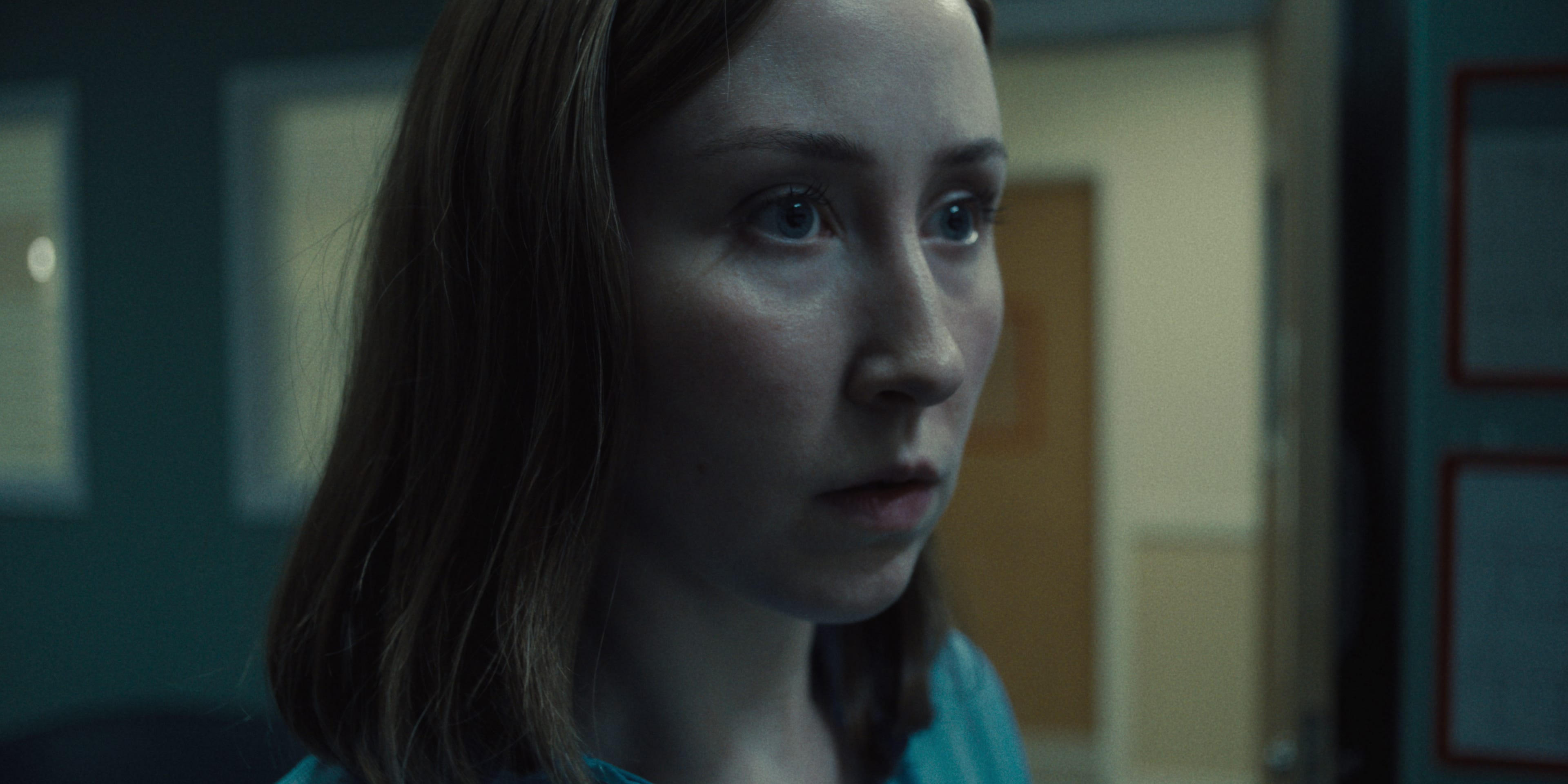
(Erin Doherty in Adolescence. Source: Netflix)
Erin Doherty and 14-year-old newcomer Owen Cooper sat across from each other at a table, and for nearly 52 minutes, neither of them could leave. That’s the premise of Episode 3 of Adolescence, the Netflix limited series that became a cultural flashpoint and one of the most decorated shows of 2025. But it’s also the reality of how Doherty built her performance as clinical psychologist Briony Ariston—not in isolation, but in the unbroken exchange between two people figuring each other out in real time.
At a SAG-AFTRA Q&A in Los Angeles on Feb. 15, moderated by Variety deputy awards and features editor Jenelle Reilly, Doherty spoke about the experience with the kind of candor that suggested she’s still working through what it meant. She hasn’t fully processed the year, she admitted. “It’s going to be a good while before I’ve done it,” she said.
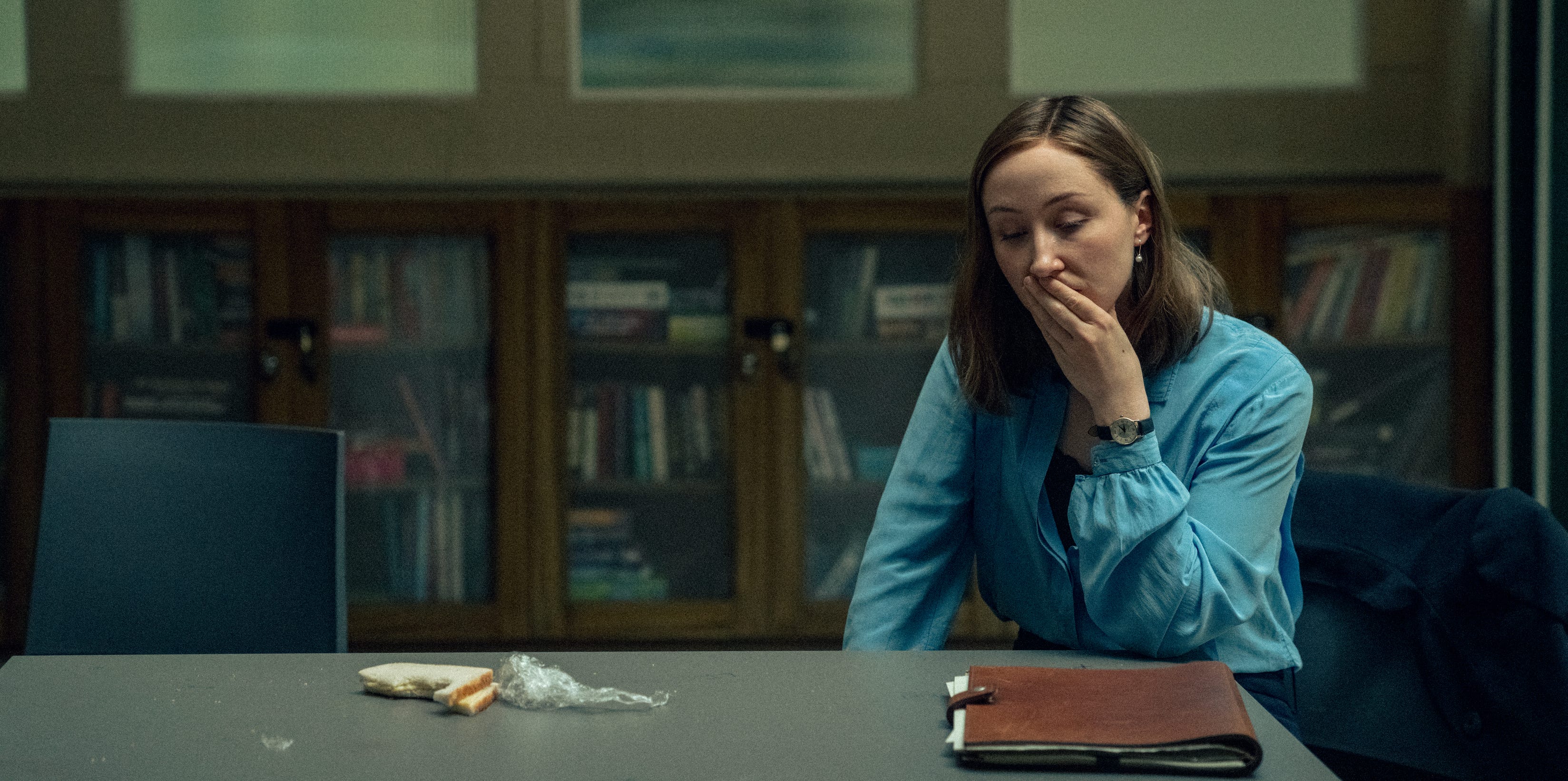
Created by Stephen Graham and Jack Thorne, Adolescence tells the story of Jamie Miller (Cooper), a 13-year-old boy arrested on suspicion of murdering a female classmate. Each of the four episodes is filmed in a single, unbroken take, following the case from arrest through investigation to its aftermath. Doherty appears in Episode 3, the installment widely regarded as the series’ emotional center, in which Briony sits across from Jamie to conduct a pretrial psychological assessment.
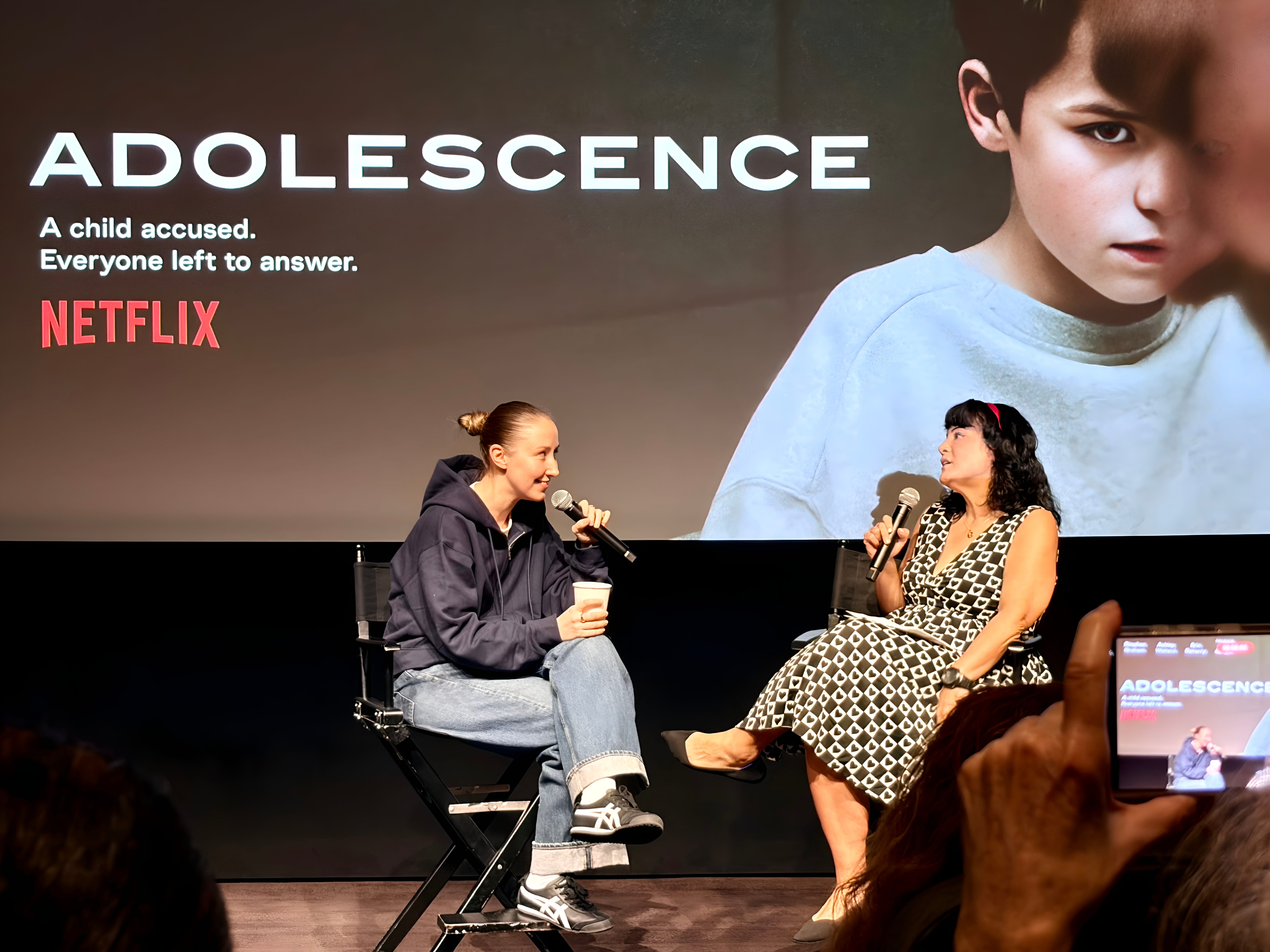
(Erin Doherty and Jenelle Reilly at the Adolescence screening and Q&A in Los Angeles on Feb. 16. Source: JP Mangalindan)
What begins as careful rapport—two people sizing each other up—slowly curdles into a far more unsettling scenario, as Jamie’s childlike deflections harden into rage shaped by online misogynistic propaganda. Over the course of the session, Briony’s professional composure gives way, her steady gaze growing into something closer to fear as the boy across from her reveals how far he’s already gone.
The series won eight Emmys in 2025, including Outstanding Limited or Anthology Series and acting trophies for Cooper, Graham, and Doherty. At the 2026 Golden Globes, it won four of its nominated categories; Doherty is also nominated for an Actors Award for Female Actor in a Television Movie or Limited Series. Beyond the awards circuit, the show sparked national conversation in the U.K. about online safety and youth misogyny. Thorne later discussed the series’ themes during testimony before Parliament’s Women and Equalities Committee, where lawmakers examined the cultural forces shaping young men and boys.
Doherty first heard about the project while wrapping A Thousand Blows, the Hulu period drama she shot with Graham across two back-to-back seasons. One day near the end of that shoot, she asked what he had coming next. Graham walked her through the concept; she recognized the potential immediately. “I was like, that’s going to be incredible,” she recalled. A month later, a voice note arrived asking if she wanted to be a part of it. She said yes before she’d finished listening.
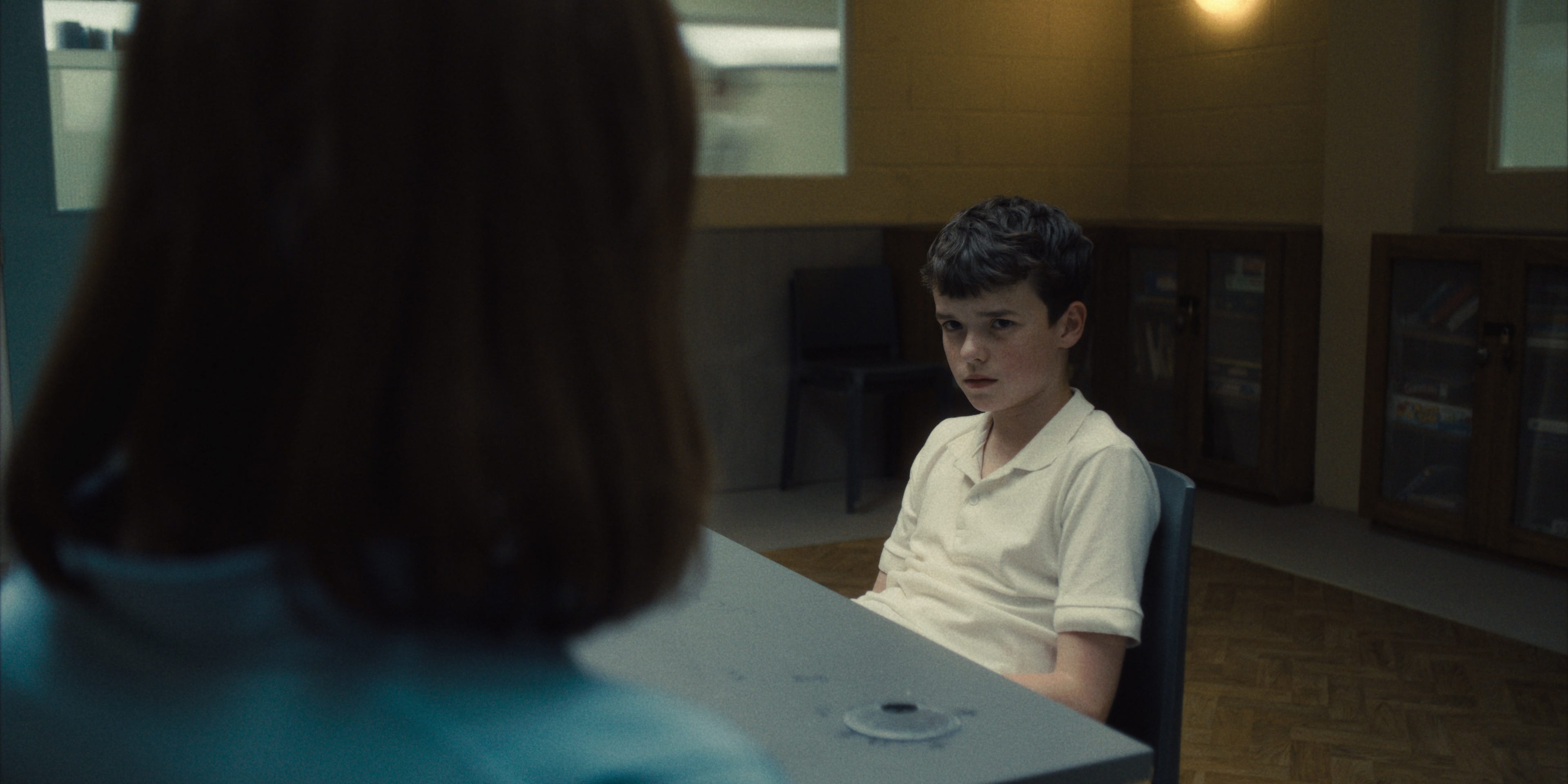
(Erin Doherty and Owen Cooper in Adolescence. Source: Netflix)
Her preparation drew from a personal place. A stage-trained actor and self-described advocate for therapy, Doherty reached out to her former therapist—someone she’d seen for roughly six years—and asked if they could simply talk about what the work feels like from the other side of the room. “I didn’t want to pry into any of her people,” Doherty said. “I just wanted to know about her life.” What stayed with her wasn’t clinical technique but a quieter insight: understanding how a therapist tries to shed the weight of a day once it’s over.
That question—when to hold onto that, when to let go—ran through much of the conversation. Doherty described retreating to her flat each evening during the shoot and putting on Gilmore Girls to soothe her mind. Between takes, she didn’t try to leave the character; she sat with it. “I think there’s something quite fascinating about just sitting in someone else’s psychology for that length of time, and then trying to do the shedding [on wrap],” she said.
The episode was shot in five days, with two full takes each day and one extra on Wednesday: 11 takes total. Doherty and Cooper had no chemistry read. They met on set. In a way, she said, that served the dynamic. “It felt really true, us kind of coming in and finding each other and having to figure it out,” she explained.
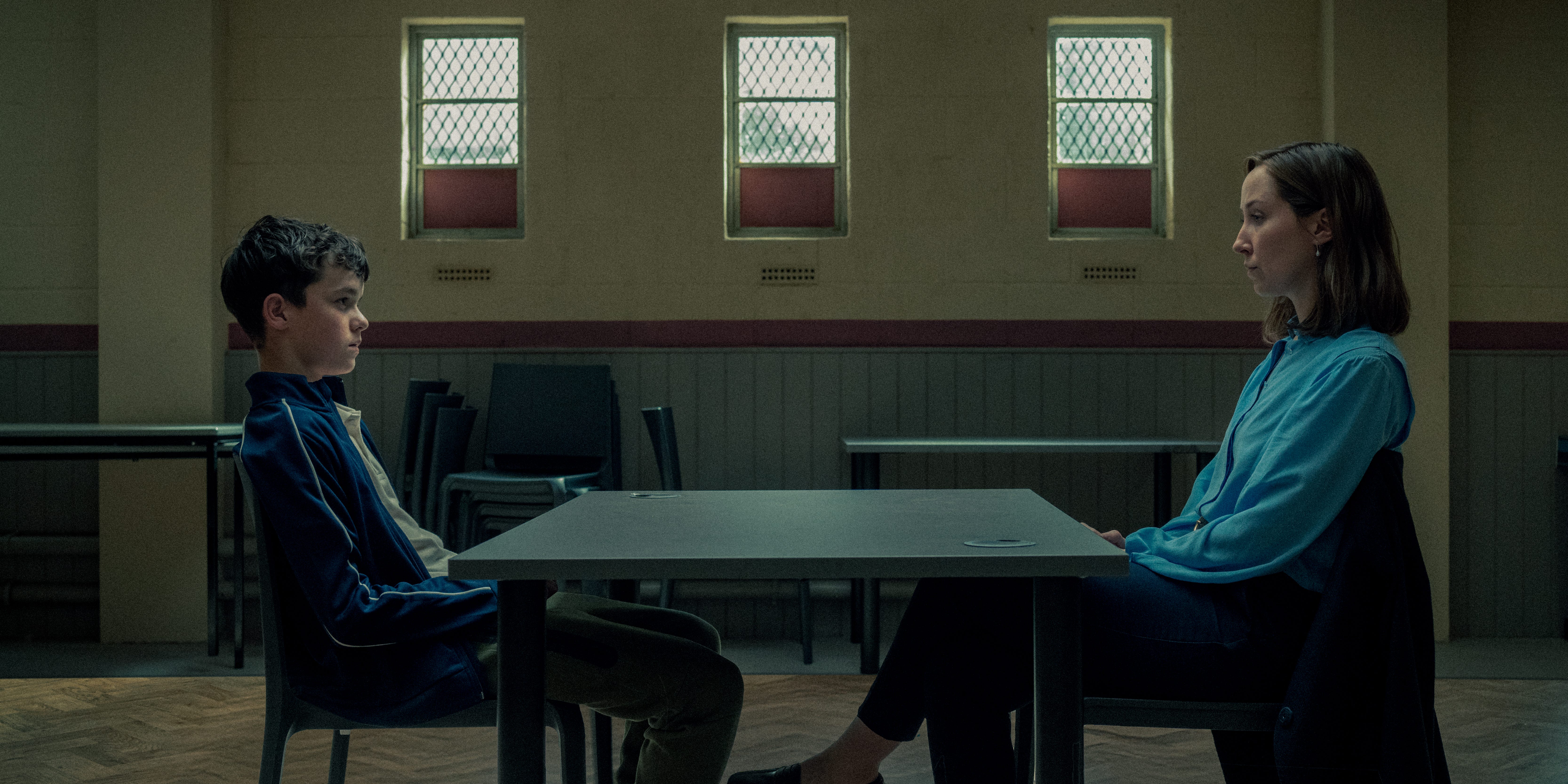
(Owen Cooper and Erin Doherty in Adolescence. Source: Netflix)
What she found surprised her. Cooper arrived with no professional experience, but within 10 minutes of meeting him, her nerves vanished. “I was like, OK, we’re going to be fine,” she said. Between takes, while Doherty took off to a quiet room to stay inside the work, Cooper played tetherball—or as the British call it, swing ball—with the actors playing facility guards. She described the contrast with unmistakable affection: his lightness didn’t undermine the work. If anything, it clarified how two performers can arrive at the same place through entirely different doors.
Working with a younger, less experienced actor reminded her of what she never wants to lose: the willingness to show up and build a connection in the space between. “Our job is to kind of turn up and be a sponge and just see what you soak up this time,” she said. The experience, she added, was a “beautiful reminder of that.”
Asked about the show’s real-world impact, Doherty returned to something smaller than Parliament or awards shows. She described walking down Carnaby Street in London’s West End one afternoon when a man pushing a baby carriage stopped her. He didn’t compliment her performance or mention the show’s accolades. He just wanted to talk about what it had stirred in him. He was a new father, and the series had caught him off guard. “He was so determined to have the conversation,” she said. “That was probably one of my favorite experiences ever.”
(Erin Doherty in Adolescence. Source: Netflix)
It’s a telling detail. Throughout the conversation, Doherty circled a version of the same idea: that acting, at its best, is less about individual craft than about what passes between two people. The one-shot format stripped away the usual safety nets: the cuts, the chance to reset. What stayed was a feeling she’s chased since her first professional role in a production of The Glass Menagerie: the charge of being fully present with another person.
“I’d love to find another one,” Doherty said of the format. “Whenever I speak to any actor, I’m like, you’ve got to do the one-take thing.” She paused, and then, as though arriving at the thought for the first time: “It’s a really amazing lesson to just kind of drill into yourself.”
She’s still drilling. The attention and the awards the series sparked—all of it matters. But what Adolescence gave Doherty was simpler: a room, a fearless young scene partner, and no way out except through. That was enough.
All four episodes of Adolescence are streaming on Netflix.